

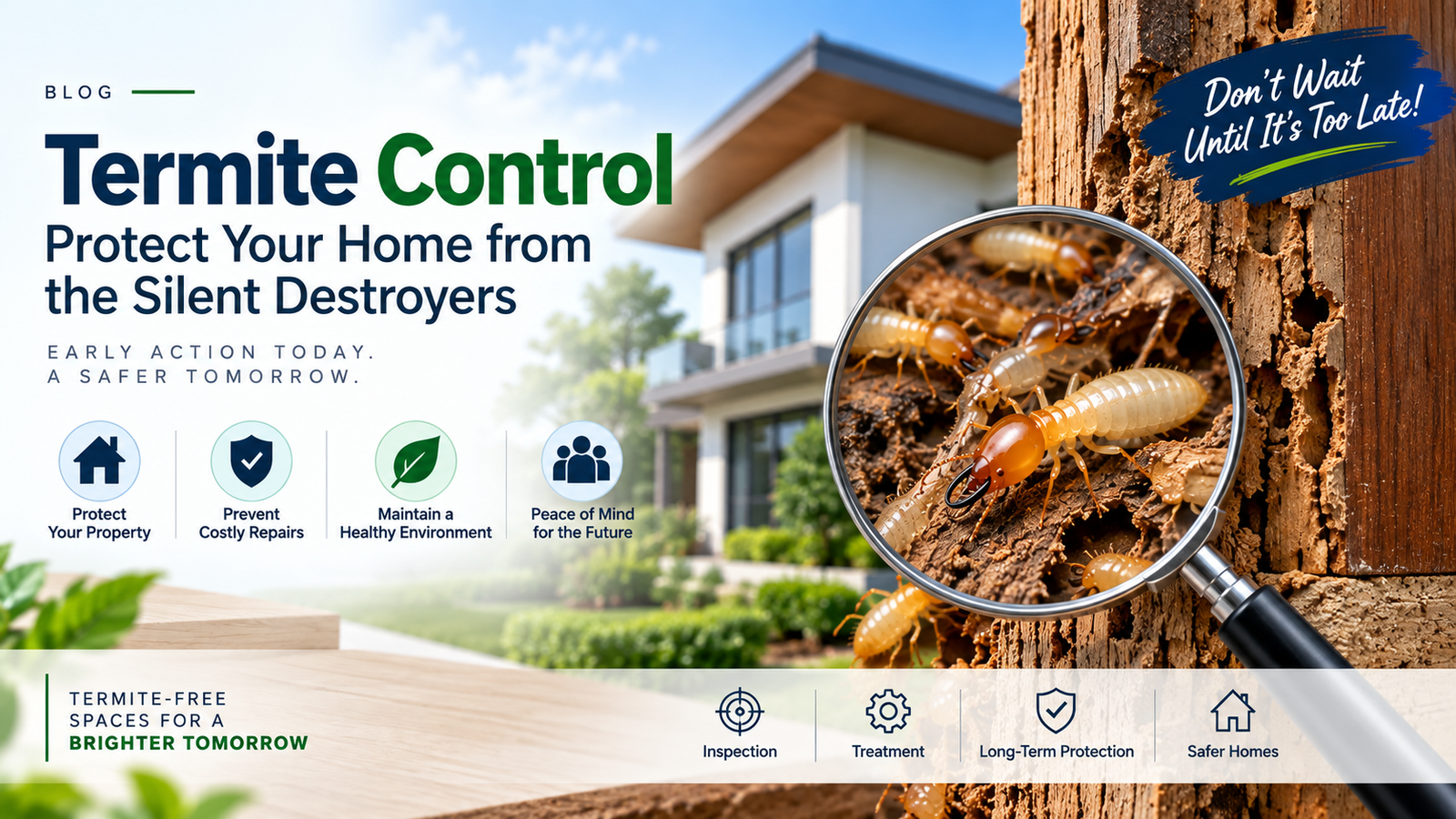
Termites are small insects, but the damage they can cause to a property can be significant. Often working unnoticed behind walls, beneath floors, and inside wooden structures, termites can gradually weaken furniture and structural components before visible signs of infestation appear.
Early detection and professional termite control are essential to protect your property, reduce repair costs, and maintain a safe and healthy living or working environment.
What Are Termites?
Termites are social insects that live in colonies and primarily feed on cellulose, a substance found in wood, paper, cardboard, and other plant-based materials.
Because termites often remain hidden while feeding, an infestation may continue for months or even years without obvious signs. This is why they are commonly known as “silent destroyers.”
A termite colony can contain a large number of individuals, allowing them to continuously search for and consume suitable sources of cellulose.
Why Are Termites a Serious Problem?
A termite infestation is more than just a nuisance. If left untreated, termites can cause extensive damage to wooden furniture, doors, window frames, flooring, false ceilings, cupboards, and other building components.
1. Structural Damage
Termites can attack wooden components and gradually reduce their strength. Severe infestations may compromise important parts of a building and result in expensive repairs.
2. Damage to Furniture
Wooden furniture, wardrobes, cabinets, doors, and other household items can become damaged from the inside, making the problem difficult to identify at an early stage.
3. Hidden Infestation
Termites frequently operate in concealed areas such as wall cavities, flooring, foundations, wooden frames, and beneath furniture. By the time visible damage appears, the infestation may already be well established.
4. Increasing Repair Costs
The longer termites remain active, the greater the potential damage. Prompt inspection and treatment can help prevent a relatively manageable problem from becoming a major expense.
Common Types of Termites
Different termite species have different nesting and feeding habits. Some of the commonly encountered groups include:
Subterranean Termites
These termites generally live in or around soil and can enter buildings through foundations, cracks, service openings, and other concealed routes. They may construct mud tubes to travel between their colony and food sources.
Drywood Termites
Drywood termites can live directly inside relatively dry wooden materials. They do not necessarily require contact with soil, making infestations in furniture, wooden frames, doors, and other timber components particularly difficult to detect.
Dampwood Termites
Dampwood termites are associated with moist or decaying wood. They are more likely to occur in areas where excessive moisture, leakage, or poor ventilation creates favorable conditions.
Signs of a Termite Infestation
Knowing the warning signs can help you identify a potential infestation before the damage becomes severe.
Look for:
- Mud tubes on walls, foundations, or other surfaces
- Hollow-sounding wood when tapped
- Damaged or weakened wooden surfaces
- Discarded termite wings near windows, doors, or light sources
- Small holes or tunnels in wooden furniture and structures
- Termite droppings or frass around wooden materials
- Cracked, bubbling, or blistered paint
- Doors or windows that become unusually difficult to open or close
- Wood that appears damaged from the inside
If you notice one or more of these signs, it is advisable to arrange a professional inspection rather than waiting for the damage to become visible throughout the property.
Where Do Termites Commonly Hide?
Termites can establish activity in many concealed areas, including:
- Wooden doors and frames
- Wardrobes and cupboards
- Wooden flooring
- False ceilings
- Wall cavities
- Furniture
- Foundations and building perimeters
- Areas with moisture or leakage
- Storage areas containing cardboard or paper materials
Regular inspection is especially important for properties with extensive wooden structures or areas exposed to moisture.
How Can You Prevent Termite Infestation?
Complete prevention cannot always be guaranteed, but several measures can reduce the conditions that encourage termite activity.
Keep the Property Dry
Repair leaking pipes, taps, roofs, bathrooms, and other sources of moisture. Ensure that areas with limited ventilation receive adequate airflow.
Avoid Wood-to-Soil Contact
Where possible, wooden structures should not have direct contact with soil. Such contact can provide termites with an easy route into a building.
Maintain Proper Ventilation
Good ventilation helps reduce excessive moisture, particularly in basements, storage spaces, kitchens, bathrooms, and other enclosed areas.
Remove Wood Debris
Do not allow unused wooden materials, cardboard, paper, or other cellulose-based materials to accumulate near the building.
Inspect Wooden Structures Regularly
Periodic inspection can help identify early signs of termite activity before extensive damage occurs.
Choose Professional Termite Control
If termites are already active, DIY solutions may only address the visible insects without eliminating the underlying colony. Professional pest control treatment is recommended for effective and long-term management.
Professional Termite Control
Effective termite management begins with a detailed inspection of the property.
A professional termite control service typically involves:
1. Inspection
The property is inspected for visible and concealed signs of termite activity.
2. Identification
The likely termite group, activity areas, entry points, and extent of infestation are assessed.
3. Treatment Planning
A suitable treatment approach is selected according to the building structure, infestation level, and affected areas.
4. Targeted Treatment
Appropriate professional treatment methods are applied to affected and vulnerable areas.
5. Follow-Up & Monitoring
Where required, follow-up inspections and monitoring help assess treatment effectiveness and identify any renewed activity.
Why Early Termite Treatment Matters
Termite damage generally progresses quietly. You may not notice a problem until wooden surfaces become visibly damaged or weakened.
Taking action at the first sign of activity can help:
- Protect valuable furniture and property
- Reduce the risk of extensive structural damage
- Minimize future repair expenses
- Identify hidden infestation areas
- Maintain a safer and better-maintained property
Protect Your Property from Termites
Your home or business is a valuable investment. Don't wait until termite damage becomes visible before taking action.
If you suspect termite activity, arrange a professional inspection as soon as possible. Early detection and appropriate treatment can make a significant difference in controlling an infestation and protecting your property.
Termite Control Today for a Safer Tomorrow
Protect your property. Protect your investment. Stay one step ahead of termites.
Contact us today to schedule a professional termite inspection and discuss the right termite control solution for your property.
“A termite-free property is a safer, healthier and better-protected property.”